Frozen Foods in the Air Fryer
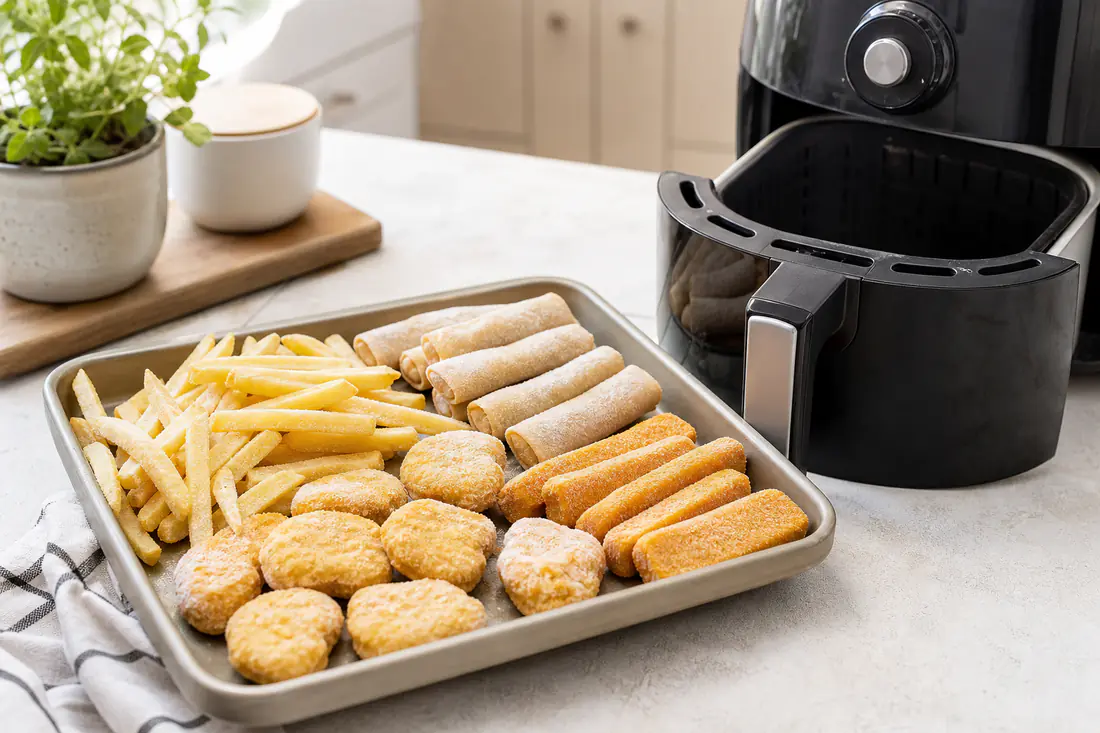
The air fryer is at its best with frozen food. Fries, nuggets and fish sticks go from the freezer to crisp in about 10 minutes, with no thawing and usually no extra oil. Even raw chicken, salmon and shrimp cook straight from frozen.
Below are the rules that apply to almost everything, a chart of times and temperatures, and the few foods better thawed first. Every time comes from the recipe linked beside it.
The basic rules for cooking frozen food
Do not thaw most foods
Pre-breaded and pre-fried products such as fries, nuggets, fish sticks and onion rings are made to be cooked frozen. Thawing them makes the coating soggy and the pieces stick together. Raw chicken breasts, fish fillets, shrimp and burger patties also cook well from frozen, as long as they are separate pieces and not a solid block.
Cook in a single layer
Frozen food releases ice as it heats. Crowd the basket and that moisture steams the food instead of crisping it. Spread the pieces out in one layer with gaps for air, and cook in two batches if you need to.
Shake or flip halfway
Frozen pieces often stick together at first. Shake the basket or separate the pieces after the first few minutes, then flip flat items such as fish sticks and patties halfway.
Season after a few minutes
Dry seasoning slides off a frozen surface. For raw frozen meat, fish and shrimp, add oil and seasoning after 3 to 10 minutes, once the outside has thawed a little. The recipes for frozen salmon and chicken breast both do this.
Skip the extra oil on prepared foods
Fries, nuggets and wedges are par-fried or pre-oiled, so they need no more. Never use aerosol spray on a nonstick basket, because it damages the coating. For raw foods, brush or toss with oil instead.
Frozen food air fryer chart
Times are for a preheated air fryer and no thawing. Start checking a minute or two early, as brands, thickness and basket size change the result. For more foods, see our air fryer cooking times chart.
| Food | Temperature | Time | Notes |
|---|---|---|---|
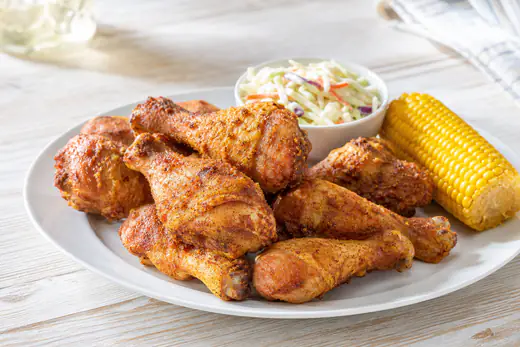
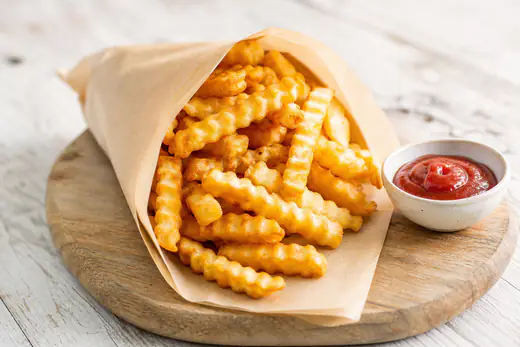
| French fries | 400 °F | 12–15 min | Shake twice, no extra oil |
| Sweet potato fries | 400 °F | 12–15 min | No extra oil |
| Potato wedges | 400 °F | 14–16 min | Shake twice |
| Onion rings | 400 °F | 8–10 min | Single layer, flip once |
| Chicken nuggets | 400 °F | 8–10 min | Or 380 °F for 10–12 min |
| Chicken tenders | 380 °F | 8–10 min | Flip halfway, 165 °F |
| Fish sticks | 400 °F | 8–10 min | Flip after 5 min |
| Breaded fish fillets | 400 °F | 10–12 min | Flip after 6 min |
| Frozen salmon fillet | 400 °F | 12–15 min | 1 inch thick; ¾ inch takes 10–12 min |
| Cod fillet | 400 °F | 12–14 min | Season after 5 min |
| Shrimp, raw | 400 °F | 8–10 min | Season after 3 min |
| Meatballs, cooked | 380 °F | 8–10 min | Shake halfway, 165 °F |
| Spring rolls | 375 °F | 8–10 min | Minis take 6–8 min |
| Personal pizza | 350 °F | 9–12 min | Must fit the basket |
| Single-serve lasagna | 350 °F | 28–32 min | Foil on for 25 min |
| Burger patties | 375 °F | 14–16 min | Flip halfway, 160 °F |
| Chicken wings, raw | 380 °F | 25–28 min | Precooked wings take 10–12 min |
| Chicken breast | 360 °F | 22–25 min | Season after 10 min, 165 °F |
| Garlic bread, Texas toast | 350 °F | 4–6 min | Flip once |
| Broccoli florets | 400 °F | 10–12 min | Shake 2–3 times |
| Cauliflower florets | 400 °F | 12–15 min | No thawing |
| Green beans | 375 °F | 12–14 min | Shake three times |
| Brussels sprouts | 380 °F | 15–18 min | Shake three times |
| Corn on the cob | 400 °F | 12–15 min | No thawing |
| Asparagus | 400 °F | 8–10 min | No thawing |
| Bacon | 350 °F | 12–14 min | Separate after 3 min |
Meat, fish and safe temperatures
Frozen raw meat takes longer than thawed meat, so trust a thermometer in the thickest part rather than the clock. The USDA safe temperature chart gives these targets:
- Poultry and anything fully cooked, such as nuggets and tenders: 165 °F
- Ground meat, including burgers and meatballs made from raw meat: 160 °F
- Whole cuts of pork, beef and lamb: 145 °F, then a 3-minute rest
- Fish: 145 °F, or until it flakes easily
- Leftovers and reheated dishes: 165 °F
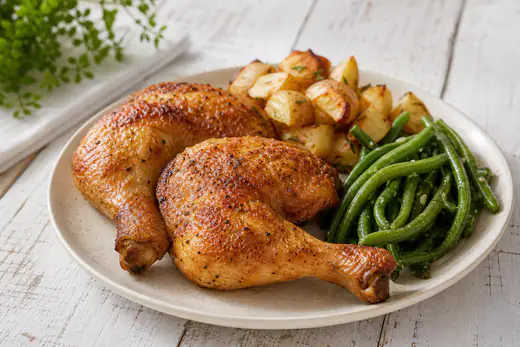
Frozen bone-in chicken thighs take 30–35 minutes at 360 °F, and boneless thighs 20–22 minutes. Frozen pork chops take 18–20 minutes at 380 °F, flipped twice.
Foods you should thaw first
Some frozen foods do not cook evenly in the basket.
- A whole turkey breast or roast. The outside overcooks before the center thaws. Thaw it in the refrigerator, as explained in our turkey breast recipe.
- Large, thick cuts such as a frozen rack of lamb or lamb chops. The recipes say to thaw first if possible.
- Pulled pork. Thaw it, then reheat it wrapped in foil.
For more on foil, see parchment paper and foil in the air fryer. Never put loose paper or foil in the basket during preheating, and never put it in without food on top.
Frequently asked questions
Do you have to thaw frozen food before air frying?
No, not for most foods. Fries, nuggets, fish sticks, spring rolls, vegetables and individual raw chicken breasts, salmon and shrimp all cook from frozen. Thaw large roasts and thick cuts.
Do you need oil for frozen food in the air fryer?
Not for prepared foods such as fries and nuggets. Raw frozen meat, fish and vegetables do better with a little oil and seasoning added after the first few minutes.
What temperature is best for frozen food?
Most fries, nuggets, fish and vegetables cook at 380–400 °F. Thick raw meat does better lower, at 350–360 °F. See our guide to converting oven recipes if the package gives oven directions.
How do I stop frozen food from sticking together?
Shake the basket or separate the pieces after 2 to 5 minutes, and cook in a single layer. Do not overfill the basket.
Is a package's air fryer time reliable?
It is a good starting point. Check a few minutes early and look for a golden crust and a hot center. Packaged items without a recipe here, such as hash browns, biscuits or corn dogs, should follow the label.
Should I preheat the air fryer for frozen food?
Yes, for about 3 minutes, as the recipes advise. A hot basket crisps the outside right away.