Is Air Frying Healthy? How It Compares With Deep Frying and Baking
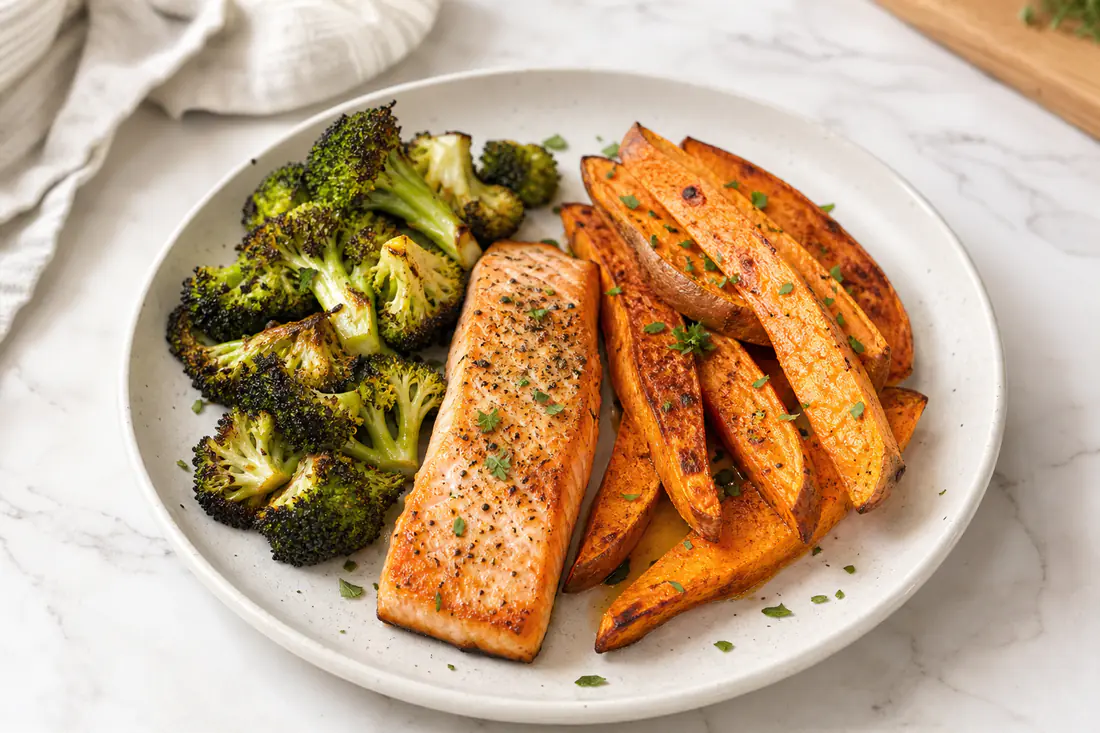
An air fryer is often described as a healthy way to cook, and it is easy to see why. It browns food with hot air and a spoonful of oil instead of a pot of it. But the label on the machine does not change what goes into it.
This guide takes a balanced look at what air frying does and does not change, how it compares with other cooking methods, and a few practical habits worth knowing.
Is air frying healthy?
It can be part of a healthy way of eating, but the method alone does not decide that. An air fryer is a small, powerful convection oven. It cooks with fast-moving hot air, so food gets a crisp surface with far less oil than deep frying needs.
What changes is how the food is cooked. What stays the same is the food itself. Frozen breaded chicken, cheese sticks and tater tots are still the same products when they come out of a basket, and a tray of roasted broccoli is still a tray of vegetables. If you want the air fryer to work in your favor, put in foods you already want to eat more of.
This article is general cooking information, not medical advice. A registered dietitian or doctor is the right person for individual diet questions.
Is air frying healthier than deep frying?
Deep frying submerges food in a large amount of hot oil, and the food absorbs some of it. Air frying uses a tablespoon or two, or none for foods that already contain fat. Because of that, air-fried food usually carries less fat from the cooking oil than the deep-fried version of the same dish.
That is a difference in oil, not a guarantee about the whole meal. A plate of air-fried wings with a creamy dip is a different meal from a plate of air-fried salmon with vegetables. For examples of both ends, compare chicken wings with salmon and roasted vegetables.
Is air frying the same as baking or convection?
Mostly, yes, in principle. A conventional oven heats still air. A convection oven adds a fan to move the air around the food. An air fryer does the same thing in a smaller box, with the heating element and fan closer to the food, so the surface browns and dries quickly.
| Method | Oil | Texture | Notes |
|---|---|---|---|
| Deep frying | Food is submerged in a large amount | Very crisp, rich | Food absorbs oil; hot oil needs careful handling |
| Pan frying | Usually a few tablespoons | Crisp on one side at a time | Needs turning and attention |
| Air frying | A spoonful or less | Crisp outside, tender inside | Small batches, fast, shake or flip once |
| Convection baking | Little or none | Evenly browned | Larger batches, longer preheat |
| Conventional baking | Little or none | Softer, less browning | Largest capacity, slowest |
Because the methods are so close, you can often swap them. Our guide to converting oven recipes to the air fryer shows how, and the air fryer cooking times chart lists settings for common foods.
What you cook matters more than the machine
A few simple choices matter more than the appliance:
- Start with whole foods. Vegetables such as broccoli and green beans, and lean proteins such as chicken breast and fish, do well in a basket.
- Treat breaded and frozen convenience foods as what they are. They cook quickly, and our frozen foods in the air fryer guide covers times, but they are the same foods you would bake.
- Watch the extras. Sauces, glazes and dips can change a dish more than the cooking oil does.
- Use only as much oil as you need. A teaspoon on a full basket of vegetables helps the seasoning stick and the edges brown.
Browning and acrylamide
Acrylamide forms when starchy foods such as potatoes and bread are cooked at high heat and turn dark. This applies to any dry-heat method, including baking, roasting and air frying. The FDA has practical advice on acrylamide that is easy to follow in an air fryer:
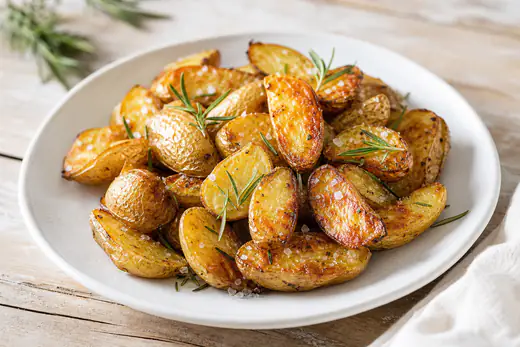
- Soak raw potato slices in water for 15 to 30 minutes and blot them dry before cooking. Our roasted potatoes recipe already includes a soak.
- Cook fries to a golden yellow rather than a dark brown.
- Toast bread to a light brown. See toast in the air fryer.
- Store potatoes in a cool, dark pantry, not in the refrigerator.
In practice that means watching the basket and pulling food when it is golden, not charred.
Nonstick basket care
Most baskets have a nonstick coating, and looking after it is part of using the machine well:
- Use silicone, wood or nylon tools, never metal utensils.
- Wash the basket by hand with a soft sponge, as described in how to clean an air fryer.
- Avoid aerosol cooking sprays on nonstick, which can leave a sticky film. An oil mister or a brush works better.
- If the coating is badly scratched or flaking, replace the basket. Check your manufacturer's instructions for details.
Healthy recipes to start with
If you want ideas that lean toward vegetables and lean protein, start with kale chips, chickpeas, cauliflower, asparagus and cod. Our guide on how much electricity an air fryer uses covers the cost side.
Frequently asked questions
Is air frying bad for you?
No cooking method is good or bad on its own. Air frying uses little oil, but the food you choose and the browning level matter more. For personal advice, ask a dietitian or doctor.
Is air frying healthier than pan frying?
Air frying typically uses less oil than pan frying, so there is less added fat from cooking. Overall health still depends on the food and the rest of the meal.
Is air frying the same as baking?
Very close. An air fryer is a compact convection oven, so it bakes and roasts with moving hot air. It is smaller and faster, with more surface browning.
Is air frying the same as convection?
Both use a fan to move hot air. An air fryer puts a stronger fan and element in a small basket, which is why food cooks sooner. Neither is a different kind of heat.
How do I lower acrylamide when air frying potatoes?
Soak raw slices for 15 to 30 minutes, blot them dry, and cook to golden yellow instead of dark brown. Keep potatoes in a cool pantry, not the refrigerator.